










![]() |
||||||
|
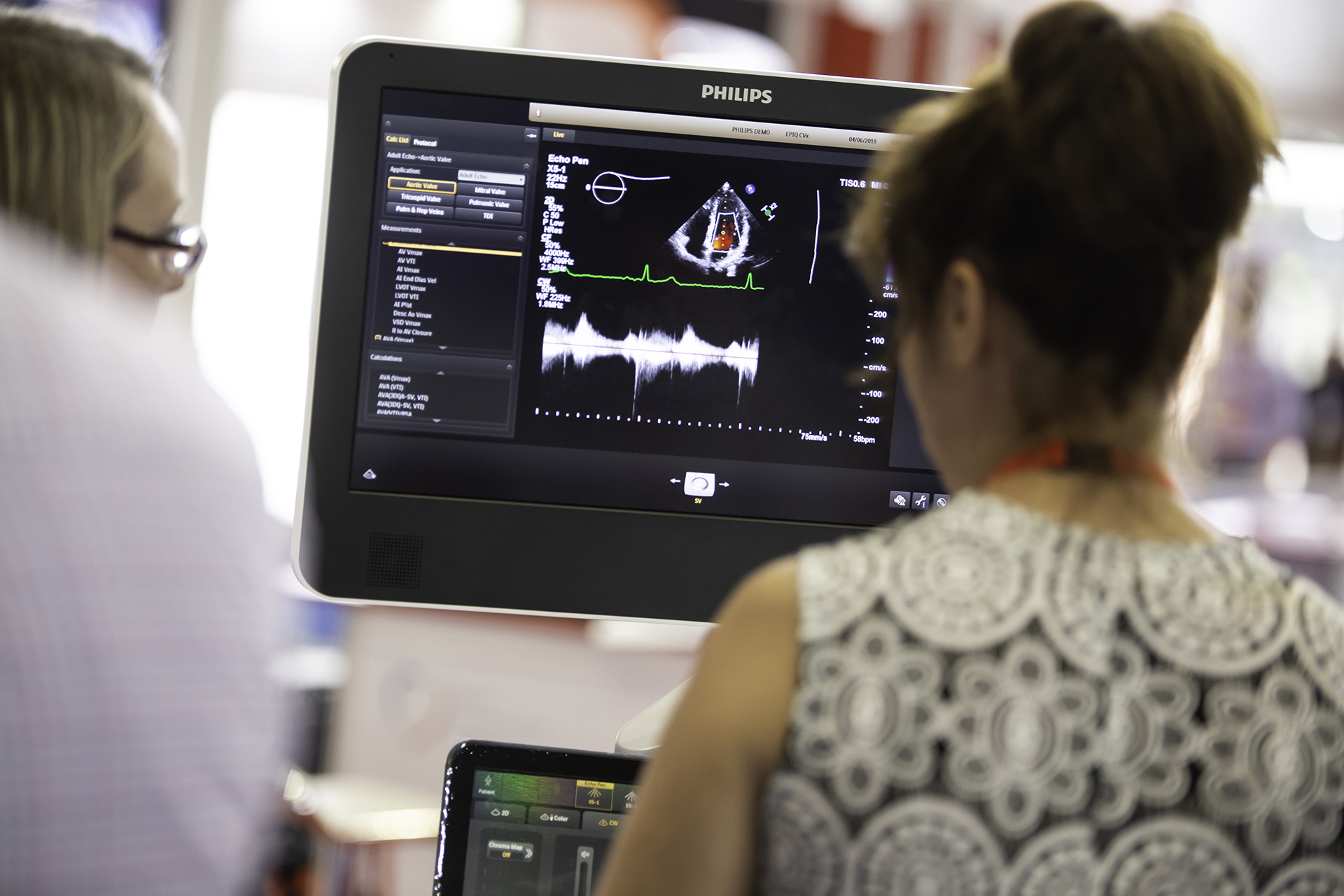
Echocardiographic Assessment of the Right Ventricular 11 June 2012BCS Editorial By: Rebecca Dobson Echocardiographic Assessment of the Right Ventricular Traditionally the importance of right ventricular (RV) function has been underestimated and often overlooked. However the RV plays a vital role in maintenance of adequate pulmonary perfusion pressures under varying circulatory conditions, and maintenance of a low systemic venous pressure to prevent organ congestion. In addition, patients with RV involvement after a myocardial infarction have an increased risk of tachy-arrhythmias, atrio-ventricular block and death. Therefore accurate assessment of RV structure and function is important in all clinical settings. Due to the complex RV morphology, echocardiographic assessment is relatively difficult compared to assessment of the left ventricle (LV). The RV has a triangular shape and wraps around the LV, forming a crescentric appearance. In addition, the RV is highly trabeculated, and there is often a moderator band stretching from the interventricular septum to the right ventricular free wall. In the normal heart, the RV wall is much thinner than the LV. It is important to note that there are no gold standard measures for RV assessment and a combination of qualitative and quantitative methods is required to provide an accurate, global estimate. Structural assessment Measurement of the RV diameter is also useful, and if possible should be measured at the level of the tricuspid annulus and in the mid ventricle. Right ventricular length should be measured from the apex to the tricuspid annulus. The RVOT diameter should also be measured at two points; adjacent to the pulmonary valve and aortic valve in the parasternal short axis view. RV free wall thickness is best assessed in the subcostal view and should be less than 0.5cm. Septal flattening, producing a “D-shaped” LV should be looked for in the parasternal short axis view, particularly in diastole. Valvular function Functional assessment Tricuspid annular plan systolic excursion (TAPSE) measurement is another quantitative measure of RV systolic function. This is a load dependant measure of the level of systolic excursion of the lateral tricuspid annulus towards the apex in the apical 4 chamber view, and is normally more than 2cm. It has been demonstrated that TAPSE correlates well with radionuclide assessment of RV ejection fraction (2cm corresponds to an ejection fraction of over 50%). It must be remembered that significant tricuspid regurgitation can affect TAPSE. The LV eccentricity index quantifies the degree of LV distortion caused by an enlarged right ventricle. In the parasternal short axis view, the left ventricle is usually round, with equal diameters, across and longitudinally. In the presence of significant RV enlargement, the LV becomes “squashed” and the ratio of the two diameters becomes greater than 1. The Tei index is a measure of myocardial performance and has been used for both the left and the right ventricles. It is derived from Doppler echocardiography or tissue Doppler recordings. It is obtained by dividing the sum of both isovolumetric contraction and relaxation intervals by the ejection time. The use of this index is controversial due to short RV isovolumic time intervals and its load dependent nature. Measurement of myocardial tissue velocity (tissue Doppler imaging) is another method of quantitative assessment of RV systolic and diastolic function. This has the advantage that the measurements are independent of geometric assumptions and endocardial border tracing. A peak systolic velocity of less than 11.5cm/sec is considered abnormal. RV tissue velocities are typically higher than those of the LV, and demonstrate a gradient from the base to the apex of the heart (higher velocities at the base). Longitudinal strain rate imaging, which is also feasible in the presence of low quality 2D images, is an additional technique. This has the added advantage of being able to distinguish active from passive myocardial motion and is relatively independent of heart rate and loading conditions. Strain and strain rate imaging has been validated for quantification of global RV function in several studies; with significantly lower strain and strain rate values being seen in a variety of conditions including pulmonary hypertension. This study demonstrated the values at the basal RV free wall of 25% (systolic strain) and -4sec -1 (peak strain rate) have a sensitivity of 81% and 85% respectively and a specificity of 82% and 88% for prediction of preserved global RV function. 3-dimensional echocardiography allows accurate robust and reproducible measurement of RV volumes and ejection fraction, and correlates well with cardiac magnetic resonance imaging. Conclusion
Mehta SR, Eikelboom JW, Natarajan MK et al. Impact of right ventricular involvement on mortality and morbidity in patients with inferior myocardial infarction. J Am Coll Cardiol 2001; 37(1):37-43 Valnsangiacomo Beuchel E, Mertens L. Imaging the right heart; the use of integrated multimodality imaging. Eur Heart J 2012; 33:949-960. Anavekar NS, Gerson D, Skali H, et al. Two- dimensional assessment of right ventricular function: an echocardiographic-MRI correlative study. Echocardiography 2007;24:452–456. Lopez-Candales A, Rajagopalan N, Saxena N, et al. Right ventricular systolic function is not the sole determinant of tricuspid annular motion. Am J Cardiol 2006;98:973e7. Kaul S, Tei C, Hopkins JM et al. Assesment of right ventricular function using 2-dimensional echocardiograpy. Am Heart J 1984; 107(3):526-531 Meluzin J, Spinarova L, Bakala J, et al. Pulsed Doppler tissue imaging of the velocity of tricuspid annular systolic motion. Eur Heart J 2001;22:340–8 Marwick TH, Yu CM, Sun JP. Myocardial Imaging; tissue Doppler and speckle tracking. Chapter 20 Tissue Doppler imaging and strain rate imaging to evaluate right ventricular function. Blackwell Publishing 2007. Number of hits: 1067 Add Comments |
||