








![]() |
||||||
|
Renal Sympathetic Denervation 06 December 2011BCS Editorial By: Adam K McDiarmid Northern Deanery Uncontrolled hypertension, although usually asymptomatic, can have profound implications for patients health and well-being. Multiple therapeutic agents have been developed to target various pathways and feedback systems that regulate systemic blood pressure. However, long term medical therapy has personal and financial implications and despite optimal medical therapy individuals can remain persistently hypertensive.
The renal sympathetic system promotes renin release, and prior to effective pharmacological agents being available sympathectomy was used as a treatment for severe hypertension.
The Simplicity HTN-2 trial1 sought to demonstrate effective renal nerve denervation via an endovascular ablation catheter, having previously described the technique in 20092. This NEJM case report demonstrated changes in both renal spillover norepinephrine following renal sympathetic nerve ablation as well as a drop in blood pressure, and provoked the pursuit of trial data.
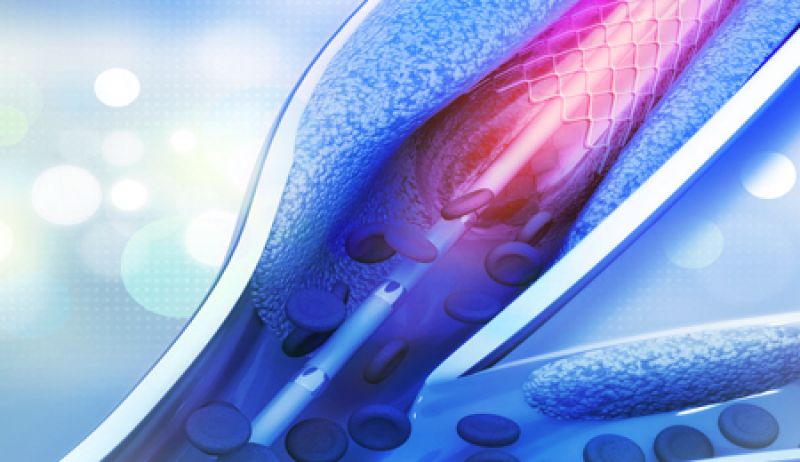
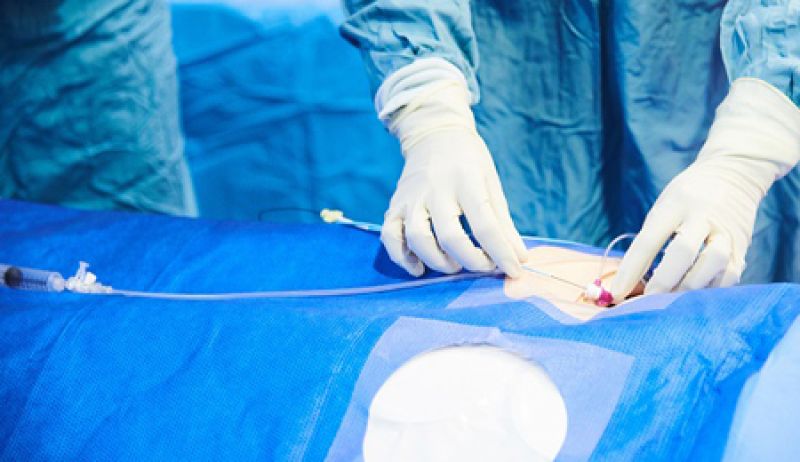
Renal sympatheic denneravation is less invasive than non-selective sympathectomy and is performed via the femoral artery, and following heparinisation ( ACT >250 seconds), the bespoke Simplicity catheter is used to administer several low power radiofrequency ablations. Radiofrequency ablation destroys sympathetic fibers that travel in the media of the renal arteries, effectively destroying the sympathetic innervation to the kidneys.
190 Patients aged 18-65 years were enrolled into Simplicity HTN-2. Patients were eligible for entry if they had a systolic blood pressure of >160mmHg (>150mmHg if type II diabetes) whilst taking at least three anti-hypertensives. They were then randomised in a 1:1 fashion to intervention or continuing medical therapy. Patients were excluded with eGFR <45ml/min per 1.73m 2, type I diabetes, stenotic valve disease, previous MI or ACS, recent stroke or contra-indication to MRI scan. Furthermore, following documented compliance with medical therapy, and persisting hypertension, patients underwent renal anatomical assessment and if significant renal artery stenosis was identified patients were excluded.
At completion of the study data was collected for 49 patients that underwent denervation and 51 in the control group.
The primary endpoint was between group change in office measured systolic blood pressure. Secondary endpoints included short & long term procedural safety (renal function & vascular comp), adverse cardiovascular event and ambulatory blood pressure measurements.
The results of the intervention as published are marked. Systolic blood pressure is shown to be markedly improved at a month and bettered by six months with a mean drop of 32/12mmHg (there is no significant change in the control group). Ambulatory blood and home pressure measurements were also seen to be improved.
Importantly Simplicity HTN-2 has demonstrated the safety of this procedure. There was no significant change in eGFR between groups, nor were any renal artery complications noted on imaging. Adverse cardiovascular events (including hyper/hypotensive episodes, transient ischaemic attacks and coronary events) were seen, however the distribution did not vary significantly between groups.
Changes in blood pressure as seen in this study, could, if maintained over time affect the development of hypertension related diseases. This is in turn could have a profound affect on the quality and length of life in those individuals with resistant hypertension. Further trials need to be performed to assess if the improvement in blood pressure is maintained, sympathetic reinnervation occurs and also on long-term associated outcomes.
The implications of this treatment could be marked and change the way we practice, including the withdrawal, or a decrease, in pharmacological agents.It is also possible that were the efficacy of this treatment to be proven the patients eligible for this treatment may change, forcing changes to convential hypertension treatment algorithms. However, whether or not this treatment will become widely available, in an NHS trying to save resources, is yet to be seen.
1. Symplicity HTN-2 Investigators, Renal sympathetic denervation in patients with treatment-resistant hypertension (The Symplicity HTN-2 Trial): a randomised controlled trial The Lancet, 376;97561903 - 1909, 4 December 2010
2. Schlaich MP, Sobotka PA, Krum H, Lambert E, Esler MD Renal Sympathetic-Nerve Ablation for Uncontrolled Hypertension NEJM 361;9 August 2007 Number of hits: 1115 Add Comments |
||