









![]() |
||||||
|
Hypertension Therapeutic Intervention: A new promising treatment for uncontrolled hypertension - Renal sympathetic nerve ablation 12 July 2010 BCS Editorial Co-author: Natasha Jaglal-Pargass
Primary Care & Family Physician
Study Investigator, Johns Hopkins Telewatch Hypertension Study, Trinidad
Percutaneous catheter-based renal sympathetic denervation is a simple and safe intervention. Findings from ongoing studies were recently presented at the late-breaking trials session at the European Society of Hypertension Annual Meeting, June 2010 in Oslo, Norway. Significant and sustained reductions in blood pressure up to two years follow-up were safely achieved in patients with multi-drug resistant hypertension.
Hypertension is a major health burden with 1 in 3 adults having the disease. The dictum of 1/3 applies: 1 in 3 is untreated, 1 in 3 is adequately treated, and 1 in 3 is uncontrolled. The kidneys play a central role amongst the brain, heart and blood vessels in the long-term control of blood pressure via the neuro-hormonal system. The renal sympathetic efferent and afferent nerves have been identified as a major contributor to the complex pathophysiology in the initiation and maintenance of hypertension in both experimental models and in humans. Patients with essential hypertension generally have increased efferent sympathetic drive to the kidneys and the sympathetic nerves to the kidneys are a final common pathway needed to raise blood pressure. Hypertension is also characterized by an increased rate of sympathetic nerve firing, possibly modulated by afferent signaling from renal sensory nerves. Thus, hyperactive signals from the kidneys may be a main cause of hypertension. These sympathetic nerves lie within and immediately adjacent to the wall of the renal artery and are accessible to an endovascular approach to intervention.
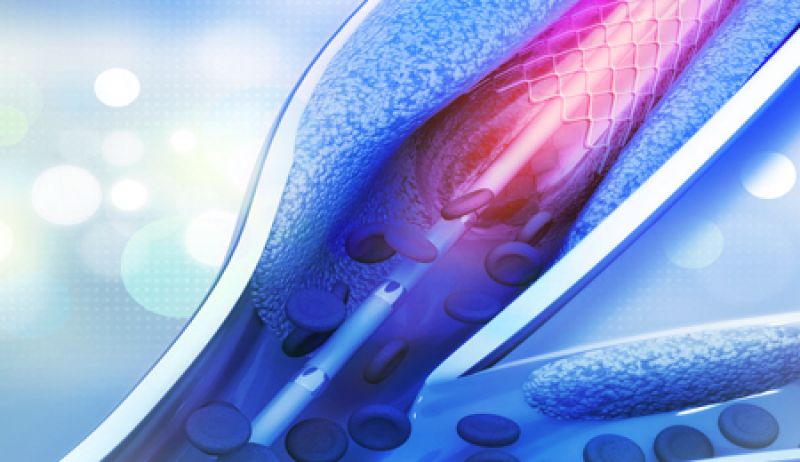
In the transcatheter renal sympathetic denervation procedure a 6F ablation catheter system is positioned into the distal renal artery and radiofrequency energy is applied for two minutes. The tip is withdrawn, circumferentially rotated in the artery, and further energy is applied. This step is repeated along the length of the renal artery, so in the end there are usually four to six applications of radiofrequency energy to each renal artery. It is a relatively brief procedure, averaged at 38 minutes.
In an international non-randomised clinical trial, patients with failed triple-antihypertensive drug therapy (systolic blood pressure ≥160 mmHg) were recruited. The study enrolled 154 patients with a mean baseline blood pressure of 176/98 mmHg despite being on an average of five antihypertensive medications. Results for the first 45 patients, a first-in-man study, were published in the Lancet 2009 as a proof-of-concept report. There was a significant and immediate reduction in both systolic and diastolic blood pressures that persisted during early follow-up [1]. For the expanded cohort of 154 patients, Dr Markus Schlaich recently presented the results at the European Meeting on Hypertension which showed at 12 months follow-up a mean decrease in systolic blood pressure of 25 mmHg and in diastolic blood pressure of 11 mmHg. At 24 months average systolic and diastolic blood pressure reduction was 33/15 mmHg respectively. There was one major complication: renal artery dissection resulting from catheter displacement before delivery of radiofrequency energy. The dissection was stented without further sequelae. With regards to adverse consequences there has been no change in renal function, and no reports of orthostatic hypotension or electrolyte disturbances. There was one case of progression of pre-existing renal artery stenosis from 40% to 80% probably related to catheter manipulation. This was successfully stented.
In this study, 92% of patients responded to intervention, defined as a fall of 10 mmHg or more in the systolic blood pressure. Currently, data is limited to predict responders to renal denervation therapy. The study was limited by the absence of 24-hour ambulatory blood pressure monitoring (ABPM). However, ABPM is incorporated in the Symplicity HTN-2 study, a prospective randomized trial to determine the effectiveness of renal denervation for patients with refractory hypertension, and is due to be completed later this year.
This novel approach holds tremendous potential as a breakthrough therapy for patients with resistant hypertension who may be a group at particularly high risk of complications. In addition, if proven safe, efficacious and durable, it may have potential in the management of hypertension in difficult clinical situations such as in patients with heart failure, renal impairment, valvular heart disease and its application may be expanded in the treatment of less severe hypertension thus reducing the requirement of life-long polypharamcy.
1. Krum H, Schlaich M, Whitbourn R, et al. Catheter-based renal sympathetic denervation for resistant hypertension: a multicentre safety and proof-of-principle cohort study. Lancet 2009 Apr 11; 373(9671):1275-81. Number of views: 385 Add Comments |
||